A Body Under Law
A photographic project on abortion rights, bodily autonomy and the power to decide.
Kraków, 22 October 2026
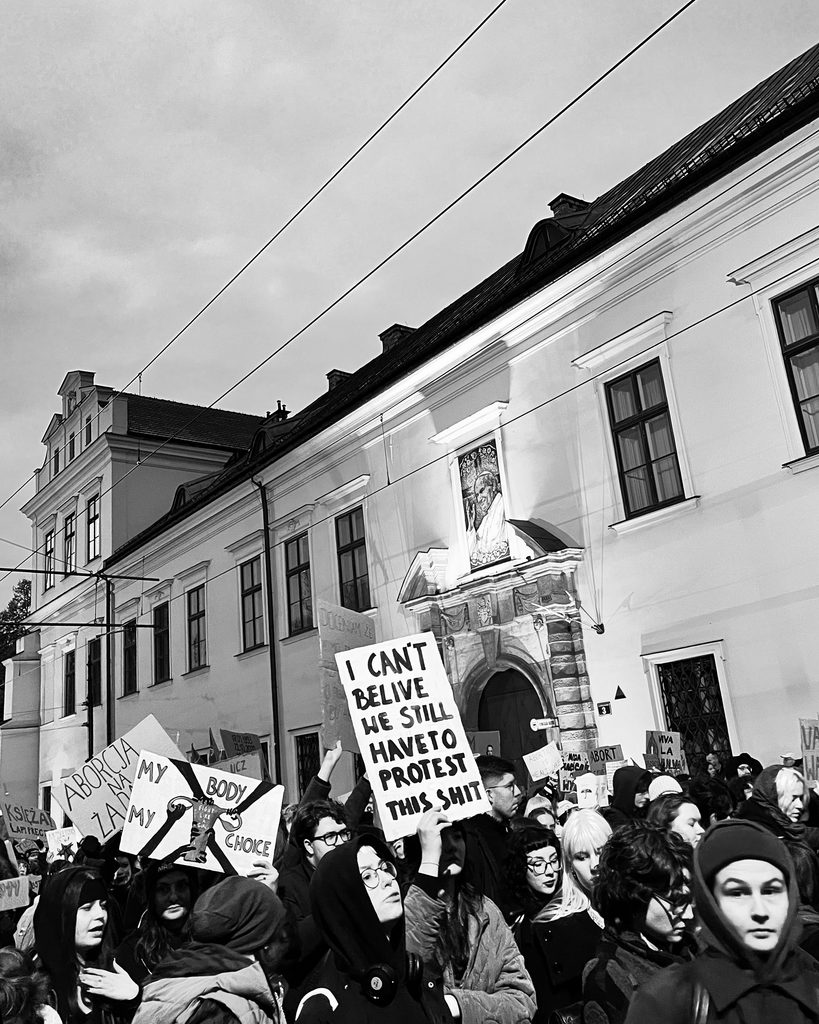
On 22 October 2026, I attended a demonstration for abortion rights in Kraków, Poland.
I couldn’t understand everything that was being said. I didn’t speak the language, yet for a few hours
I felt that I belonged to something that went beyond words.
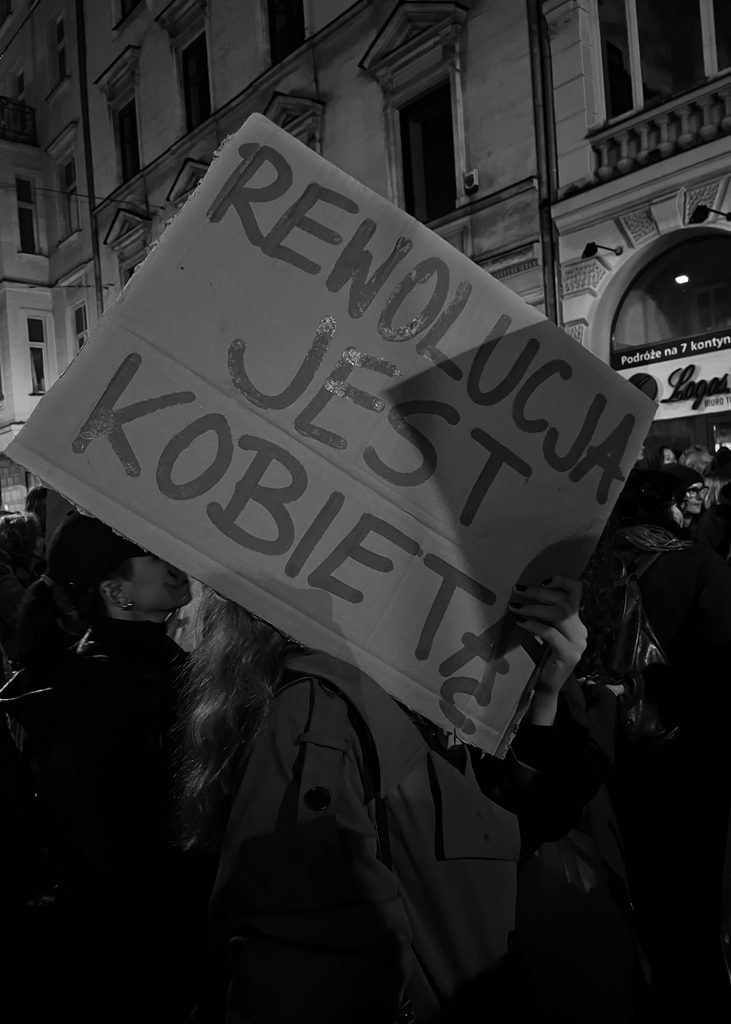
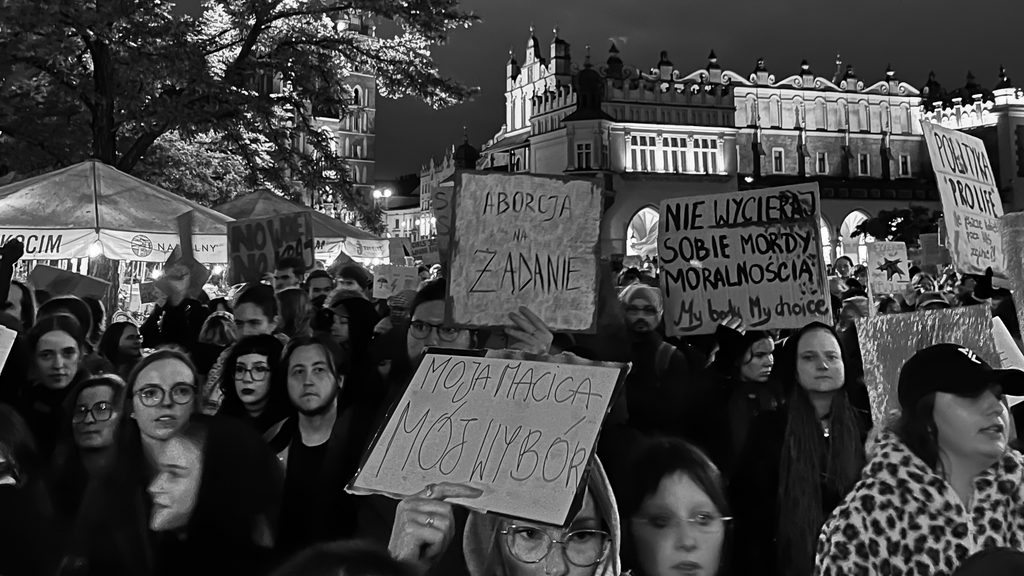
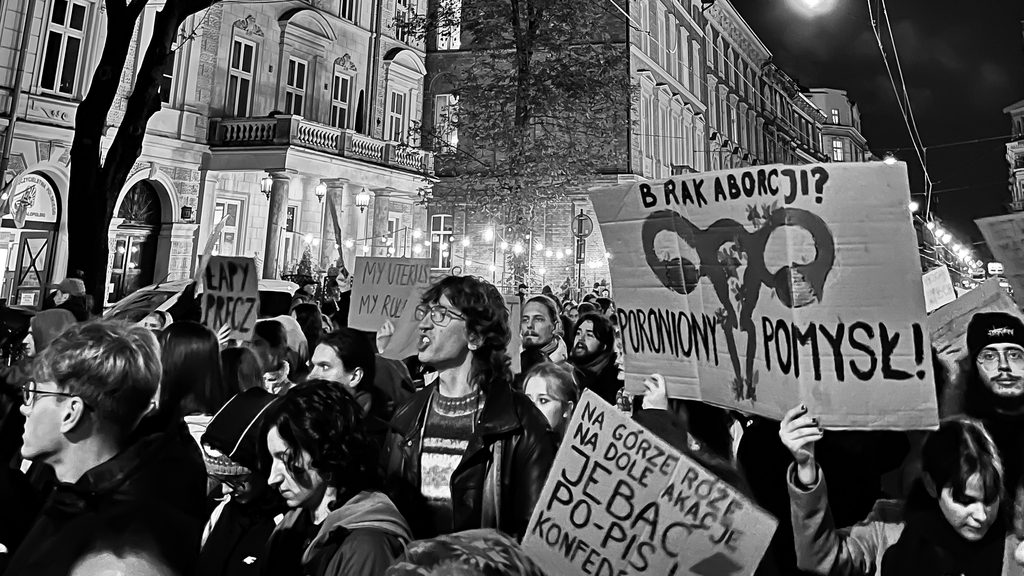
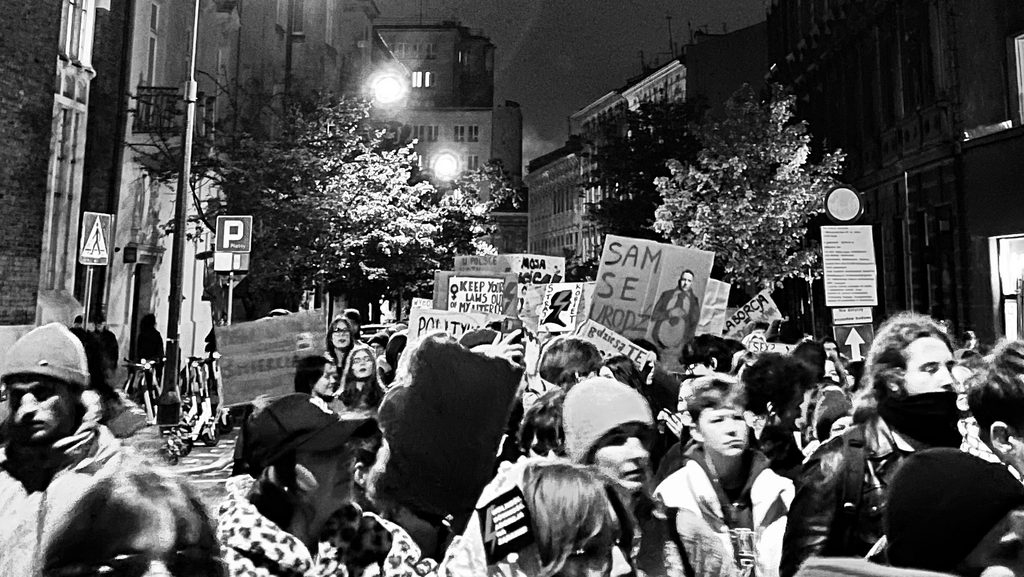
I listened to young women share their experiences with a force that stayed with me: anger, pain, sadness, indignation. Their testimonies weren’t abstract arguments, but deeply emotional accounts, spoken by people asking to be heard and to be able to make decisions about their own lives.
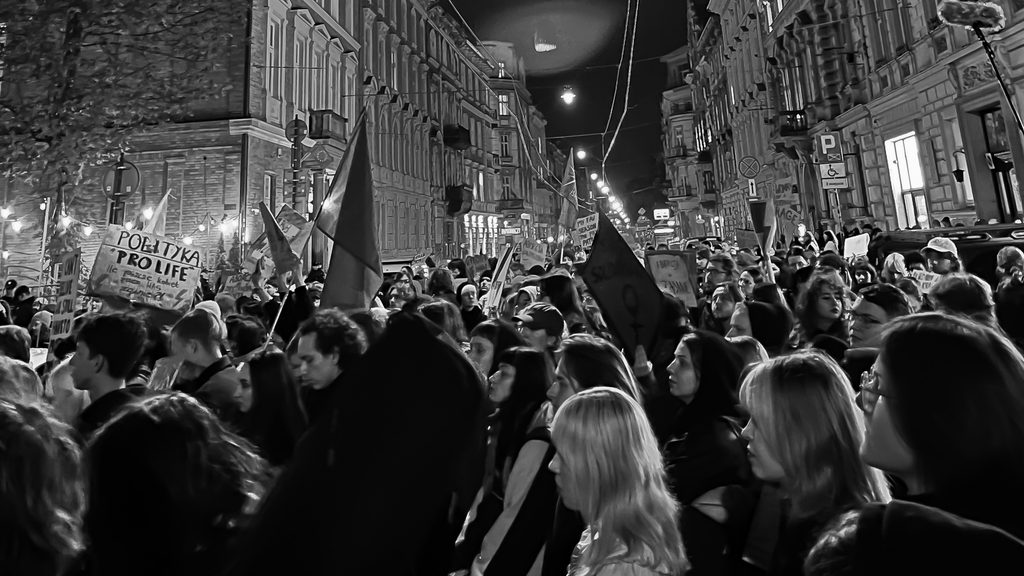
What struck me was the solidarity. Women and men, children, teenagers, people with different stories and sensibilities, all gathered in the same space. Together, we moved through the city, bringing it to a standstill with our chants. As people waited to continue on their way, some joined us, chanting the same slogans.
Even without understanding every sentence, I could recognise what these people were standing up for.
That is what stayed with me the most: the possibility of an individual demand becoming a collective presence, capable of occupying a space and interrupting, even if only for a few hours, the ordinary course of life.
The demonstration led me to reflect on the relationship between the body, freedom and power. How can such a deeply personal decision become an object of political and social control?
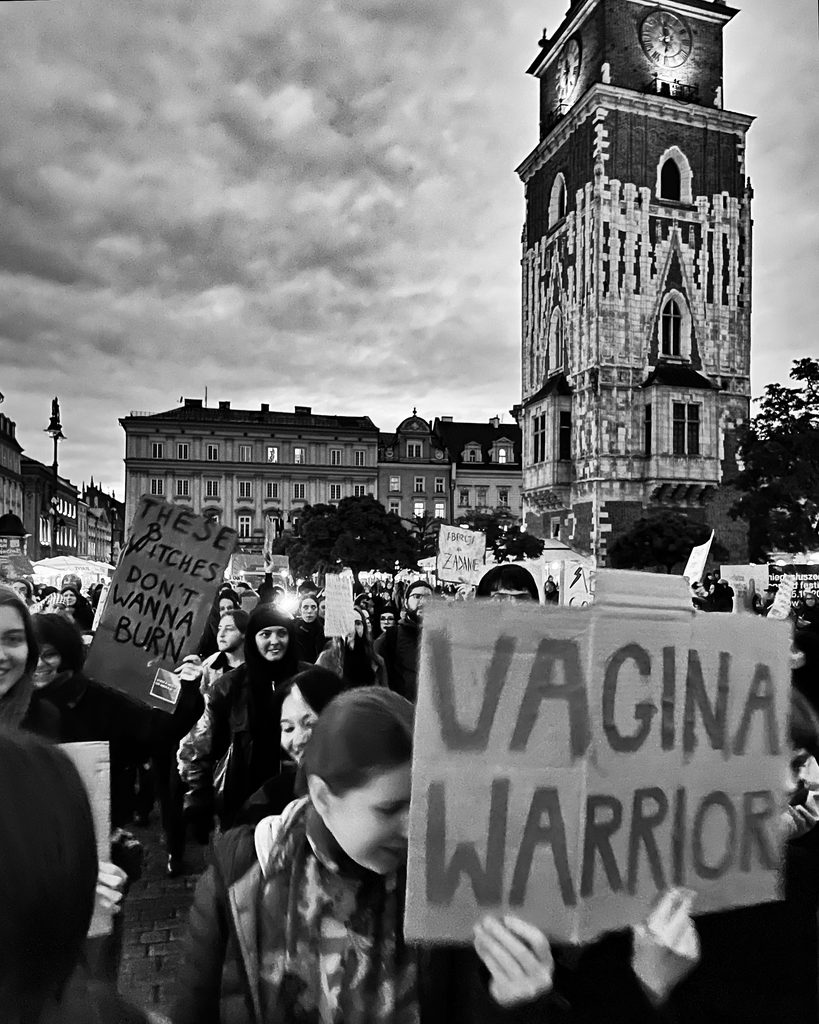
A pregnancy involves a body, a person’s health, family circumstances, economic conditions, relationships and future possibilities. There is no single answer that fits everyone, because no two lives are the same.
My position is clear: I support the right to choose.
This doesn’t mean believing that abortion is always the right choice, or that becoming a parent is the wrong one. It means recognising that neither decision should be imposed from the outside.
If I were ever faced with a pregnancy, I would want to be able to decide whether to continue it or end it, taking into account my wishes, my circumstances, my possibilities and the future I would be able to build. I would want the same freedom to be recognised for everyone, including those who might reach a different conclusion from mine.
I don’t believe the state can know a person’s life better than that person does. It can provide healthcare, information, protection, financial support and dignified conditions in which to raise a child. It can create the conditions in which a wanted pregnancy doesn’t become a journey defined by insecurity. But making a decision on someone’s behalf isn’t the same as supporting them.
The right to choose doesn’t guarantee that every decision will be easy. It guarantees that the decision belongs to the person who will have to live with it.
Poland and Italy represent different contexts, yet both demonstrate how important it is to distinguish between the formal recognition of a right and the actual possibility of exercising it.
In Poland, the restrictions introduced following the 2020 Constitutional Tribunal ruling have drastically reduced the circumstances in which a pregnancy can legally be terminated. Protests continue to call for legislative change and effective access to care.
In Italy, abortion is regulated by Law No. 194 of 1978. However, its legal status doesn’t automatically eliminate the difficulties associated with accessing services, the geographical distribution of healthcare facilities or the organisation of medical care.
The differences between these countries shouldn’t be overlooked: their laws and legal consequences aren’t the same. Yet both contexts raise a common question: how meaningful is a freedom when exercising it also depends on where we live, the information available to us and the resources we have?
According to official Italian data for 2023, 65,746 voluntary terminations of pregnancy were reported. Worldwide, the World Health Organization estimates that around 73 million induced abortions take place every year. These figures refer to different contexts and methodologies, but they are enough to remind us that abortion is neither a marginal nor a purely theoretical issue.
Behind every statistic are circumstances that a number alone cannot tell us about.
There is another contradiction that concerns me, particularly when I think about Italy: a society that encourages people to have children should also consider the conditions under which they can afford to raise them.
Financial support for families is often discussed, but a birth grant alone cannot solve the problems of inadequate wages, high rents, insecure employment, inaccessible childcare and the difficulty of balancing work and caregiving.
A child needs love, but also a home, food, healthcare, time, education and stability. Love is essential, but it cannot replace the material conditions necessary for a decent life.
According to ISTAT, Italy’s National Institute of Statistics, approximately 5.7 million people in Italy were living in absolute poverty in 2024. Among children, the rate reached 13.8%. These figures don’t determine who should or shouldn’t have children. They show that economic vulnerability is a reality that must be addressed when we talk about parenthood.
Support for motherhood and parenthood should expand people’s possibilities, not become a tool for directing their reproductive decisions.
The freedom to choose also includes the possibility of wanting a child without being held back by financial insecurity, just as it includes the possibility of not having children or ending a pregnancy without being forced to justify one’s decision.
This question is also intertwined with the future of our planet.
We live within a system that consumes resources, generates enormous amounts of waste and distributes the costs and benefits of development unequally. The climate and energy crises compel us to question our models of production and consumption, as well as the conditions we are leaving to future generations.
I don’t believe the environmental crisis should become a reason to decide who should or shouldn’t have children. Rather, I am interested in reflecting on the kind of society we live in, how resources are distributed and whether we can build a dignified and sustainable future.
Having a child, choosing not to have children or ending a pregnancy are different decisions that cannot be reduced to a single moral standard. Sustainability shouldn’t become another constraint on individual choices, but a collective responsibility towards the world we share.
If we want to reduce unintended pregnancies, we must begin long before someone finds themselves facing a difficult decision.
Sex education, knowledge of our own bodies, consent, mutual respect and access to contraception are essential tools for making more informed choices.
This responsibility doesn’t belong to women alone. It also concerns men, relationships, families, schools and institutions. Sexuality education means learning about our bodies, recognising our own boundaries and those of others, understanding consent and sharing responsibility for our actions.
Abortion shouldn’t be the only subject through which a society talks about sexuality. Prevention must begin with information, education and access to the resources people need.
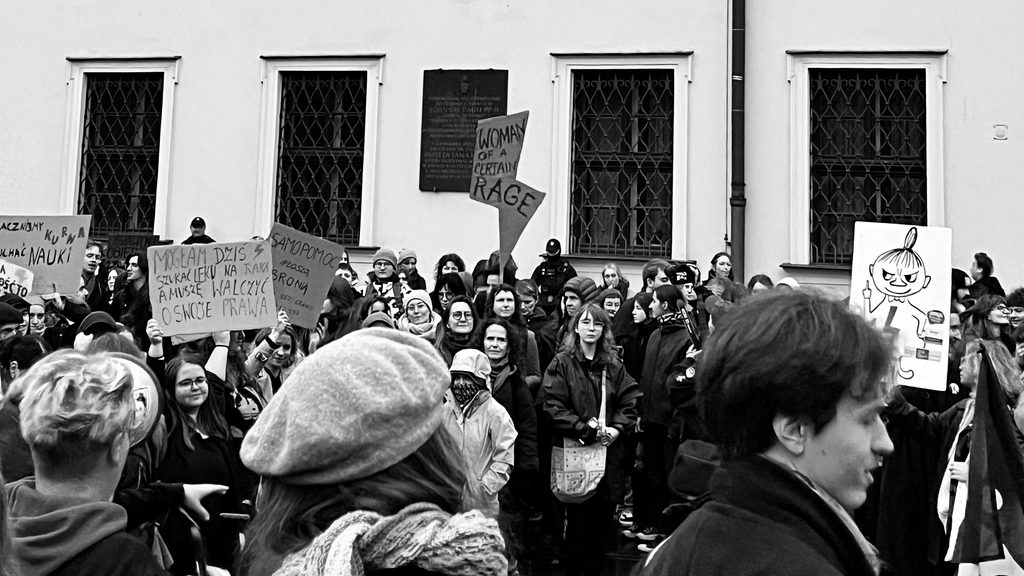
The photographs I took in Kraków grew out of this experience. They cannot tell everything I heard, nor can they fully convey the intensity of those hours. But they can preserve fragments: bodies gathered together, gestures, written words, anger and the presence people offered one another.
I chose to photograph because I believe looking is a way of drawing closer to what we don’t fully understand. And because, sometimes, what happens to people far away from us can reveal something essential about the freedom we take for granted.
This project doesn’t claim to contain every experience of abortion within a single story. Instead, it seeks to open a space where images, testimonies, data and reflections can coexist, allowing us to examine the consequences of laws and social conditions without forgetting the people who live through them.
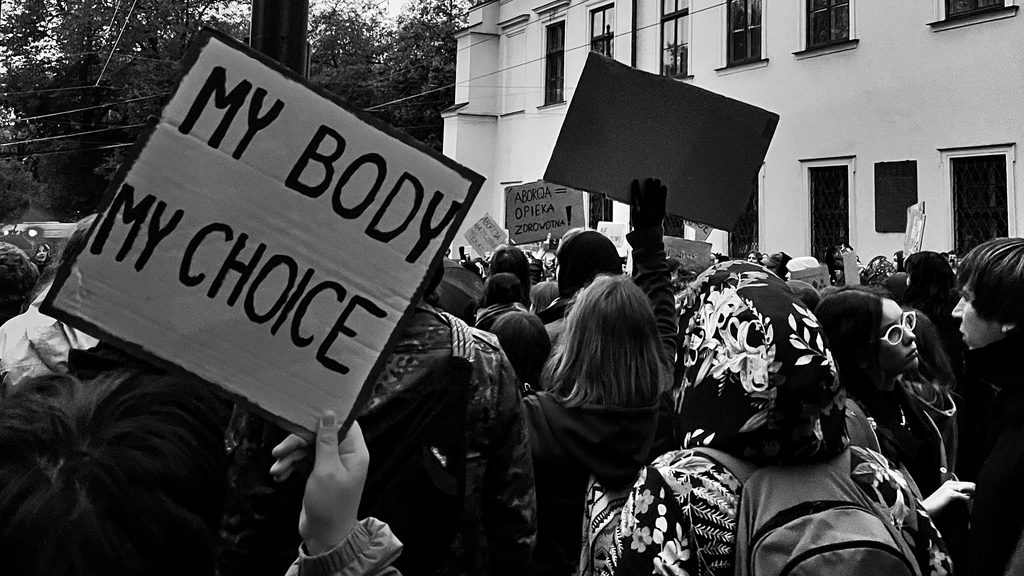
We aren’t reproduction machines. We are human beings, with desires, limitations, responsibilities and possible futures.
My body, my choice. Not because we must all make the same choice, but because no one should be deprived of the possibility of making it.